6/28/2011

Sick Cocoon and Sick Ball by Jeannine van Erk

photo via designboom, image courtesy of bel+bo
These stunning lanters are actually made from custom-dyed medical bandages. The designer, Jeannine van Erk, carefully layers the dyed bandages around the balloons with an adhesive, allows it to dry then pops the balloons and off you go with these beautiful and earthy coloured lamp shades. They are subtle and welcoming, inviting and non-pretentious. Perhaps a reflection of the designers personality. I LOVE the idea of turning bandages into lampshades. Re-making a material from one purpose to the next. I also adore the idea of each lampshade being different from the next due to them being handmade. There is something very lovely about a handcrafted work that you just don't get with mass-produced and factory made items. The knowledge that somebody has carefully crafted something with their own hands (I am known for having a hand fetish) appeals to me. It feels as if an object has reached its full potential when it is hand-crafted as the maker has given everything in his/her physical and mental capabilities at that point in time and that to me is intriguing, it tells a story, it has a narrative, it has meaning.

Jeannine van Erk works for Berlin based design studio bel+bo and exhibited these works at the DMY Berlin (Berlin International Design Festival) held this earlier this month.

This is how the designers describe these products:

Cocon- Malade and Boule Malade are unique, handcrafted lampshades.
Their individuality is achieved by hand-made, specially dyed natural materials.
Because of the craftsmanship of the Dutch designer, Jeannine van Erk, each lampshade is different.
Their special quality is warm, atmospheric light in a simple, yet contemporary design.

The color chosen for an order is never exactly the same as shown. These are natural pigments,
so they will vary slightly.

They are available in 7 different colours
detail view of sick cocoon bandage lantern via designboom
cocon and boule malade, assorted colours, image via designboom, image courtesy of bel+bo
designer making the sick lanterns, image via designboom, courtesy of bel+bo

6/20/2011

State of Design 2011 Festival Guide - Now available

This years State of Design festival guide has been launched and is available from their website, here.

The theme for this year's festival is Design that moves. Personally, I am interested in the interventions that take place outside in the urban fabric, such as the Landscape Urbanism 72 Hour Urban Action in the Docklands that sees teams of architects, builders, landscape architects, urban designers etc...live, eat, sleep and work on their chosen sites and construct new urban forms through site specific interventions. (Correction, the name of this event has now changed to Urban Realities, Landscape Urbanism 3 Day Design Challenge.

Chasing Kitsune, from here

Hassell's Chasing Kitsune which is a Japanese food truck that will make its way around the city and adapt to its imnmediate surroundings, Mapping the Burbs, which is an Architectural discovery tour conducted on your bike.
 Camp Street CampOut + LookOut, which invites you to design and recreate the tent city for a day. Participants are invited to pitch their designs for a tent and display it in Alfred Deakin Place, Ballarat. Using recycled fabric, everyone is invited to tailor their tent claim a little bit of this public space.

Other than what's happening outside on our streets and beyond and true to my personal interests, there is also a worshop called MakeUp which takes you through the art of reusing and upcycling material. From transforming unwanted vintage wallpaper to reusing old yacht sailcloths and turning them into teepees.

This and much much more stuff to do in Victoria from the 20-31 July 2011.

6/16/2011

Opening of the Highline' Section 02'

This project makes me so incredibly happy. It makes use of a disused elevated old railway system in NYC and turns it into a fantastic civic space through which one gets an alternative view of the streets of new york.

Instead of demolishing this disused infrastructure, landscape architects and urban designers Field Operations along with architects Diller Scofidio + Renfro and planting designer Piet Oudolf collaborated together to celebrate civic life in one of the worlds most famous metropolises with this elevated park corridor. Remaking an old and once vital part of the industrial city into a new, vital part of the public city.

perspective view, merging vegetation and the built environment around it, giving an indication of what sort of space you can expect upon visiting the Highline.


The design celebrates the human scale, interaction between people, interaction between people and the surrounding built environment, interaction between people and industrial heritage and the interaction between people and a more romantic planting scheme that could be argued somewhat removes the visitors from the very city that this piece of infrastructure once served. As the people at dezeen describe it:


The park accommodates the wild, the cultivated, the intimate, and the social. Access points are durational experiences designed to prolong the transition from the frenetic pace of city streets to the slow otherworldly landscape above.

Top view of the Highline Park, some vegetation found on the elevated level is in fact tree canopies planted on ground level. image via dezeen

Rudanko+Kankkunen - Vocational school in Sra Pou, Cambodia.

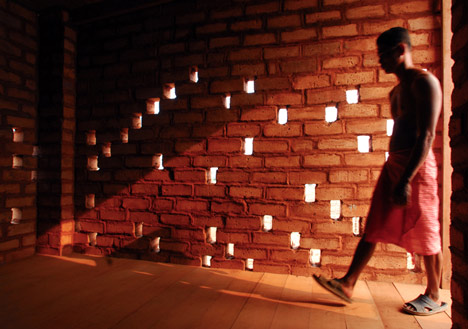
This is such a meaningful project by finish architects Rudanko+Kankkunen. The school was constructed with hand-dried blocks of local soil and built by the local community. via dezeen
Window/Door Shutters, image by architects

 Using materials found closeby and having the locals building the school as a design process makes this project close to the heart and it gives it more soul.

I love the colours of the window shutters, they are vibrant and contrasting to the terracotta coloured bricks.

Facade, image via architects
Student looking through the woven window shutters, image via architects
It would've been nice to have added the surrounding lot to the design aswell. For this sort of project I would imagine having a workshop with the children and planting perhaps fruit trees and other edible crops to the school yard.

Holes in wall to let sunlight through and also aid in ventilation of the building, image via dezeen

Urban Interventions

My urban intervention Crate[or] is now online for your perusal here. Feel free to email or comment on the project. It forms a part of ongoing design research that I am conducting into approaching the city at a human scale when discussing urban development and the understanding of the forces that play out in the city.

Crate[or], photo by author

6/02/2011

IKEA's 'Homemade is Best' - The architecture of Baking

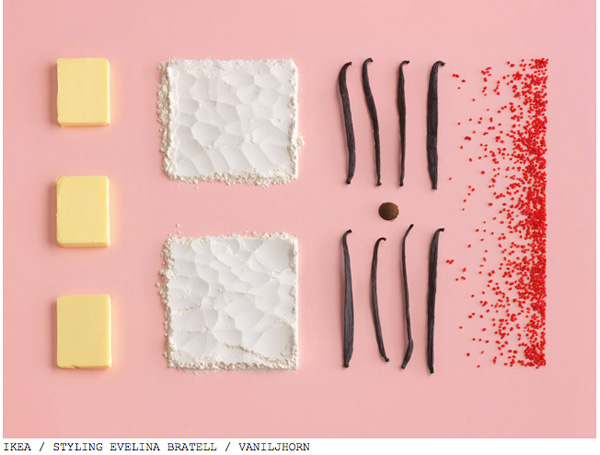
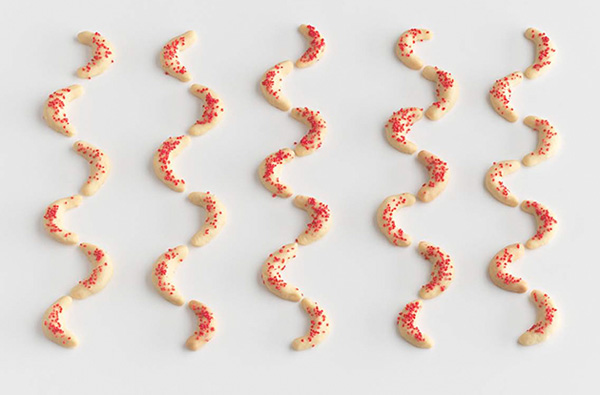
Ikea's 'Homemade is Best' cook book contains 30 traditional Swedish baked goods recipes with a twist. Each recipe is complimented by an image of the ingredients before they are mixed together and baked. It is a wonderful documentation of the process of baking. NO, actually, it is the process of arranging the ingredients of baking.

Napoleonbakelser, before

Napoleonbakelser,after

The ingredients are placed in a decorative composition adjacent to each other and this image is then paired with the end result. But if I was to imagine the scenery of when I bake and cook in my kitchen, the image is a far cry from the stylized and glorified images of this book. It would be interesting to contrast this work by documenting the 'real' process of making and juxtaposition the images next to each other to further the notion of documenting a design process. Because, it is only the ingredients and the end result that is on display here, and the actual MAKING part seem to have been left out.

Kanelbullar (Cinnamon Buns) before


Kanelbullar (Cinnamon Buns) after
Still, a cool idea from the ad-agency Forsman & Bodenfors.

The homemade is best book serve the purpose of drawing more people towards the kitchen and obviously to IKEA's showroom. That is beside the point. These days, people seem to be more obsessed with the end result and product that they forget the beauty in the making of things. This is why I love this project. It starts to talk about the intimate and domestic in a beautiful way. It is a world away from fast-food outlets and mass-production of food. 
Mandelmusslor (Almond mussels), before

Mandelmusslor (Almond mussels), after


Yet the irony is that this work is meant to draw people towards the mass-production of the IKEA kitchen. As if IKEA is saying: OK, so here we have it, we'll let you go back to domesticity and the art of making unique food in your own home so that you don't have to worry about getting your consciousness dirty with the immorality of mass-produced food. Leave the mass-production to us and you'll be a happy peach. 

vaniljhorn (vanilla horn) before,
from here

vaniljhorn (vanilla horn) after, from here

Looking at the homemade is best work, makes me a happy peach but I just want to reconfigure the work to include the process of making it as well.

Now I know the point was not that at all, it is just the way I think. Originally, the ad company made the cookbook, created an iphone app that traced your exercise and told you when  you'd done enough exercise and earned the calories to eat one of the recepies. Clever, isn't it. Apparently, the ad reached 40 million people without IKEA spending a cent on media and promotional costs..somehow...I am contributing to the publicity too. Hmmm.

Here's a link to the movie.

I think I might just visually suggest how this process would look if applied to the components of an architectural project. Watch this space.

5/22/2011

String Spectacular

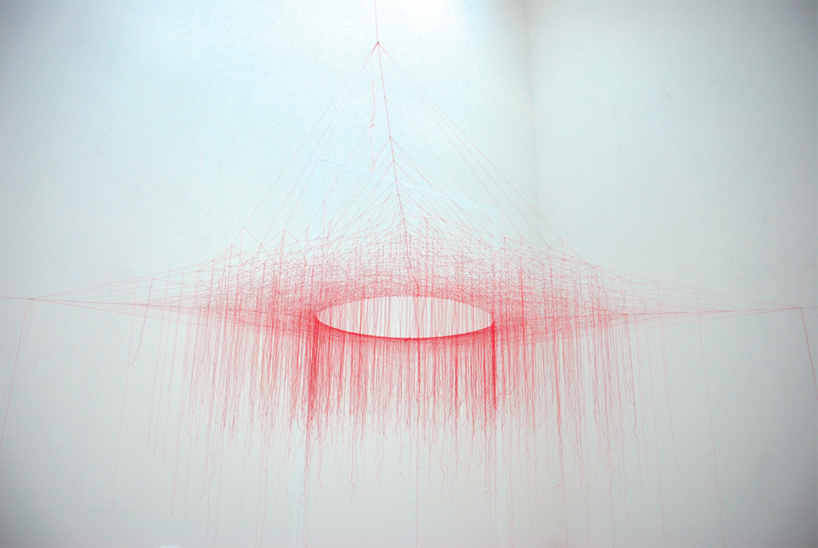
full view, from designboom
Akiko Ikeuchi knots silk thread in a process that takes up to a month for gallery installations. The works are room size scales and the work is so delicate and subtle which I think reflects the process of making it and the personality of the artist. The knots seem to reflect the daily disruptancies that one face, one by one, Ikeuchi documents these experiences into a a narrative of collective moments. One knot is one moment in time, brought together into a story. Stunning.

detail of installation showing the knots, via here


This is a google translation of the artist's own description of the work, from Japanese to English. I believe the translation is not completely accurate but I reckon you still get the just of the intent, in fact, it is very beautiful.


ー four axonemal Azuma Minami northwest respectively, are stretched to the northeast ー southwest.
Yarn and yarn cross connectedness are all tied together with 引合Tsu.

Red is the color of my approach to life and responded to the incident which occurred in the past two years.
Is evidence of every single knot in my day.

It has spanned many times is still tied at first glance, that appears to be strong and stable,
Breaks down quickly once the off-axis yarns.

The world is made up of subtle fragile balance.

                □

"A feeling" came over the fade again.
Kind of vibration?
Words can not.
And narrowed his eyes, threw out - and as you seem to try to slightly roll the brain.
If they disappear quickly enter forcibly separated.

The silk tie by keeping it connected and the sensor.

Some exposure to light and air, see how hiding something that faintly.
That you kept going away before it's light and air inside the right or not.
Because I have that desire to with it.

I believe this particular piece was exhibited at gallery 21 in 2009. 

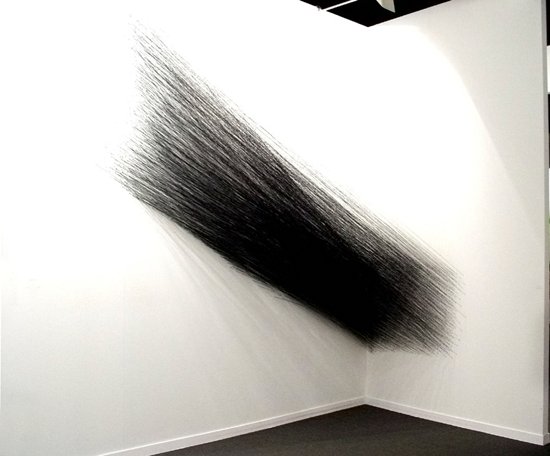
Edith Derdyk, Slice, 2003
4.000 meters of black cotton line, 2.800 stapples and 4 days of setting up
Arco Feira de Arte, Madrid, Spain
photo: Edith Derdyk
To continue on artists that work with string and thread, Brazilian artist Edith Derdyk's work is also absolutely stunning. 


Edith Derdyk, Rasures III, 1998
60.000 meters of black cotton line, 10.000 stapples and 13 days of setting up
City Canibal, curator: Daniela Bousso
Paço das Artes, São Paulo, Brazil
photo: Gal Oppido

It is the visual intensity and the rigorous process of creating the piece that impress and interest me the most. Derdyk's process begins with drawing and the idea of the line, according to the artist.


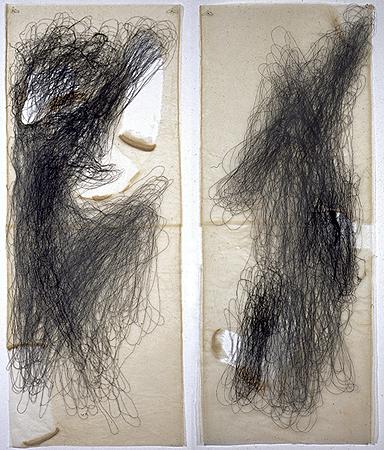
Edith Derdyk, Projects and sketches, 1999/2001
Ball-point pen,
paper

Interlineation, 1998
Drawings
Paper, black cotton line, vinyl glue
50 x 180 cm
photo: Rômulo Fialdini
More of Edith Derdyk's work here.

This is quite a full on description of her work by Arnaldo Artunes in his mini essay Cocoon, found here:

It all started with the paper being torn. After drawing for many years, and also after drawing with thread (adding its material meaning to its use – threads made of threads) as if embroidering the surface of the paper, Edith began to open incisions, filling them with blçack thread, in a paradoxical gesture – tearing so that the sewing could appear beneath the tearing) not the sewing of the tearing, but a sewing beneath the teraing), like surgical sutures within the deepest skin layers. The result were organic suggedtions, many times sexual (vaginas, incisions, wounds; the obscenity of interanl hair under the beardless surface of the paper). Then these incisions started to swell, as if the stitches were inflaming. The wounds that Edith had opened, suddenly became tumors, with ever more stretched relieves. Dark bulbs that leaped from within the translucid and delicate skin of the rice paper, with its dark lines keeping something that is always about to leak. As if paper were live bodies, from within which, depending on the depth of the tearing, some sort of guts would have to leap.
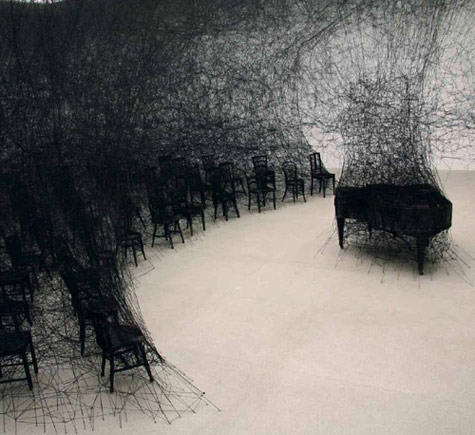
Chiharu Shiota, In silence, 2009 
centrepasquart, biel bienne, switzerland
I have also had a huge crush and massive respect and awe for installation and performance artist Chiharu Shiota, who's work is short of absolutely gobsmackingly spine chillingly god damn spectacular and who recently exhibited at the 'detached' gallery in Hobart that I sadly missed.  Above is a 2009 piece from In silence, a progressive art/installation piece that has been erected and showed at a number of different locations since 2007 when it was part of a performance at the Kanagawa Arts Foundation, in Kanagawa, Japan. (below). Of course, the process of making this space, the setting up and weaving of the wool is of particular interest for me but also the intent of Shiota, who wants to depict the sound of silence in space.Very beautiful.


In Silence, Toshi Ichiyanagi x Unit2007, found here


Chiharu Shiota, "In Silence" (2008). Piano, Chairs, Wool

Related Posts Plugin for WordPress, Blogger...