10/31/2012

Memories and carving pumpkins


 How do you celebrate Halloween?

In Sweden where I grew up, November 1st, is a day where you send a thought to loved ones that have passed away and you often visit their graves, put some plants and light a candle in their memory. I remember going with my grandmother to my grandfathers grave at the Eastern Cemetary in Malmo each year, and often also going to my paternal great grandmothers grave straight afterwards, to say a silent hello and to remember their life with us.

Östra kyrkogården Malmö, from here

But more so, what is really more prevalent in my mind is the memory of feelings and sensations I got when entering this particular cemetery in late Swedish autumn. Often a rugged, cold and wet afternoon with not much sunlight, the remnants of once colourful leaves now turning brown on the ground as the photosynthesis gradually removes the chlorophyll from its veins. Muddled conversations from dark figures hunching over the graves of their forefathers, warm air blowing from their mouths as they say their hellos, how are yous and goodbyes. The flickering light from hundreds of individual candles that have been gently placed on each grave from somebody that needs to remember. A wet and stubborn runny nose turning red as the cold bites harder as darkness and evening sets in. The trees are almost naked now and the evergreen shrubbery and hedges line the grave divisions strictly ordering the system of the dead.
The sombre atmosphere is something that I treasure in my heart and in my memory. Tradition makes it happen and the landscape makes you feel it. 

from here


This way of celebrating Halloween predates the Christian church and is actually linked to Pagan Rituals of guiding the dead. The pagans believed that when summer was finished the dead returned home and needed people to light their way with fires, hence the lighting of candles, decorating and visiting of graves in modern time.
Here in Australia, I don’t quite know how it would feel like to experience the cemetery, tonight on the eve of the dead. I don’t know any dead people here. Although, being a landscape architect, I have of course wandered the aisles of many of the local cemeteries on days off but never on this night.
It would be such a different experience. First of all, we are going into summer here in Australia, so it would be warmer, perhaps more humid or dry, the mist, the wet air that is the fairy dance in the northern hemisphere is likely to be dust cloud from the gravel path here in the south, hovering slightly above the ground. Generally, my experience has been that the vegetation around the Australian cemeteries tend to be quite arid and bushy/thorny, almost like the dead themselves. They are not designed for grand displays of planting schemes; neither do they seem to be public spaces used beyond their primary program. But I haven’t seen them all, so I couldn’t possibly tell you that all of them are like this.


Östra kyrkogården Malmö, from here

Östra kyrkogården Malmö, from here


Commercially, Halloween to me is a pumpkin, little kids begging for sweets and money, horror on the television and a good excuse for grown up dress up parties and frolicking around.
Yes, I admit it. I bought a pumpkin solely on the premise that I’d get to carve into it and turn it into a scary looking piece of home decoration for a couple of nights in our house lit up with tea candles.

this years pumpkin

Buying a pumpkin and sitting down to watch Tim Burton’s Nightmare Before Christmas in candle light is as far as I get to celebrate the eve of the dead’s return to our earth this year as my two little darlings need their mum for bedtime.

Spiritually, I am sending thought to loved ones now passed. May they proceed in peace through the landscapes of memory.


10/26/2012

callmegustie on etsy


I have finally made my first listing on etsy.

Being at home with my two young children I have decided to begin crafting scandi inspired designs and set up a work from home. I love the process of making and draw inspiration from the everyday as well as my Swedish heritage.

Out of my love for scandinavian and nordic design styles, colours and form, Stoccie Blue was born. Christmas is my absolute favourite holiday of the year and so I made a Christmas stocking out of burlap and cotton fabric. It is neat and rustic and blends in nicely in homes that are decorated with earthy colours and tones.


Stoccie Blue is the first in a series of stockings to come so stay tuned.


You can purchase Stoccie Blue here


8/16/2012

Blanki


A really nice part of being at home with my daughter is that I have time to make things for our household. Meaningful little gems that the family could (hopefully) hold onto, until one day when those things are handed down to the next generation.


I have over the years, run away from the concept of family, heritage, craft, nutritional, seasonal and holistic living and the idea of a comfortable home. But since having my first child, this has all changed and I nurture all of those things in a completely newfound and obsessive way.

 So my second child is about to join us (8 days to go) and I made him a little blanket that I can wrap him in and make him real snug. As Melbourne is still rugged, wet and grey and winter still has a stronghold on us. I call it the blanki, as this is a slang word for blanket in our house. 


I thought I'd share it here on the blog with you. It has a typical nordic look and feel about it, which suits well and which was a deliberate choice as I am beginning my journey to embrace and reclaim the heritage that I left 10 years back, not only for myself but to pass onto my children.


Of course, as a designer, I never really stop embracing the notion of reinventing myself and for the time being, I welcome the domestic goddess with open arms.

1/21/2012

your special place

I went to yoga today. Ultimately I would've liked to be able to write that I had a nice fresh morning walk there, meeting and greeting people on the way, gazing into people's private gardens, observing the play of light, enjoying a late summer chill in the air before the heat of the day and the smoke of the city consume your senses. Well, I can't. I drove there. It is so far from where I live, it takes 20 minutes to drive. Melbourne, you are [not] magnificent in providing adequate public transport for east-west cross travelling. Instead I tuned into community radio and listneded to some jazz as I drove towards my (almost) weekly practice. I was early and had the opportunity to chit chat a bit with my teacher and she always has some nice and warm words to light up my mood.

Went through the yoga class with relative ease despite being amidst an ache running through my lower back through my butt and shooting into my thigh.

After the main bulk of the session, our teacher always asks us to relax and allow our breaths to take us to our very own special places. This, I must say, was a bit of a challenge for me as I more often than not begin an intellectual role play inside my head pondering A or B when I really should be allowing my process towards this place to guide me there. It is like design really. What have you done throughout your design process and how can this inform where you will take the project next.

The idea of my own very special spiritual place sounds great. I just don't think that I have one quite yet. 

I tried to tell myself that the place I was looking for was the forest clearing of my child hood that had flying gold particles in the air, fussy soft mounds of moss as a carpet, amidst blueberry bushes, chantarelle mushrooms and spruce trees filling the air with that musty fresh pine smell. Sure, nice place. But I am already there! As soon as I think about it, it is not about the journey there, but being there already. Where does this leave me?

Well, this morning, I spent the last 10 minutes of my yoga class, not relaxing but thinking about the fact that I wasn't allowing myself to find my spiritual place.

Next time.

Good Night

11/29/2011

Wood blanks

Oooo, I am very excited about having received these beautiful wood blanks in the post yesterday! They were neatly separate into individual bags according to the tree species and are extraordinary, intricate, detailed and very special indeed. I can't wait to put them together with the first batch of puzzle boards as little wood knobs.


We are going on holiday next week but I know I will be itching to get back so that I can finally put together the first real puzzle boards for sale!

11/24/2011

yule tid

 Greetings.

It is has been a couple of months since I popped in here. Wow, time flies. Busy busy times at the moment with christmas coming up. For the crafty and creative person comes a-whole-lot-of-stuff-to-do panic around about this time of the year. I took a chill pill the other day and made some decorations for our hallway. I have saved all these fruit netting bags to find a reuse for them and they finally came handy to create this hanging, pagan queen like woman...I love the simplicity of this piece and the best part of this is that I get to eat more ice cream now to get more sticks! This pagan theme is reminding me that I am finally coming to terms with the complexity of my scandinavian heritage and my newfound home in australia...I am working towards embracing both in finding a pathway for my creative streak.

Hanging decoration in hallway
Pagan queen


I also had some scraps lying around after finishing a bouquet arrangement for my friends wedding flowers. I used this awesome (but expensive) hat making mesh and it is quite stiff which makes for great folded flower like shapes with bits of fabric stuck in it. 

Fabric flower

It is the first advent on sunday (not that i am very religious but it is a nice custom regardless). Got some christmas decorations up, next on the itinerary are the stockings. Have all the materials, just need to finish the tie I am sowing for my partner for a wedding we are going to next weekend. Pweh, hard life being a maker. (NOT)

oh, ps. YES. We finally moved the TV away from our main living area, the conversations that has enabled over the last week is unreal. Loving it.

9/15/2011

Bottom-up urbanism at its finest - Heath Nash at HIFA 2011

Recycle plastic bottle pattern - Image via designboom courtesy of Heath Nash
 This project includes all the things that I love about design and more specifically about the urban landscape and meaningful spatial site interventions. Heath Nash, project coordinator and designer produced and organised this work along with local artisans for Harare International Festival of the Art. HIFA performing arts festival 2011. The South-African designer, reused thousands of recycled plastic bottles and other materials such as plastic buckets and aluminium cans to create a set of canopies for the urban dweller to take to when in need of shade. According to designboom, Nash got the inspiration from simply walking the streets of the Zimbabwean capital whilst observing how people occupied and congregated under the city's tree canopies so to avoid the Southern African mercury. 
This observation was translated into a pragmatic and spatial take on the idea of recycling waste materials derived from consumption. 

Components of an extensive distribution system - Image via designboom courtesy of Heath Nash


The way in which the canopies are constructed is simply magic. Repetitive pattern is one of the most powerful ways of generating beauty and striking form in my eyes and the combining of cultural and social observation with a commentary of mass-consumption, leads way to a meaningful site intervention.

The project suggests a site intervention that is constructed at a 1:1 scale, utilising local craftsmanship with the organising mind of a designer. The other beauty in this project lie in the system that this 1:1 site intervention actually represents. Where all these bottles, cans and buckets come from remain unrepresented, perhaps it is not doable but I hope that you get the picture. A 1:1 intervention that assembles tens of thousands of small objects that was part of a mass-distribution system going out for consumption to then be returned to another system, that of recycling and end up in this meaningful installation. Simply beauty.

re-ordering, re-assembling, re-configuring - Image via designboom courtesy of Heath Nash
process - Image via designboom courtesy of Heath Nash

7/27/2011

Light my pulp

A lovely design process by Enrique Romero de la Llana. The designer created these lamp shades using old newspapers, mixing them into a paste and drying them out into various simple and organic forms. I have totally developed a fetish for lamp shades these days!

Over at Design Milk, they observed the upcycling of the newspaper into a somewhat celebration of the tree that once was the paper. I find this to be the case because of the texture that the designer achieved for the lamps. It  reminds me of old gnarly and fairy like trees.

Images below from design milk


7/10/2011

Ebony Bizys - Everyday Tokyo

These photos by graphic designer Ebony Bizys are just the type of everyday landscape that I am researching for my own design projects.

I love how this landscape of pots and interior furniture and fittings represents ordinary everyday life of the city's inhabitants and their desire to make a mark on their surroundings. Claiming a little bit of space, growing, nursing and caring for a little bit of life, a small scale intervention in a 21st century large scale city. You might want to check out: urban interior, a group of researchers based in Melbourne that recently released a book exploring the idea of urban interior.

image via otherpeopleshouses

image via otherpeopleshouses

image via hellosandwich

image via hellosandwich

7/08/2011

Roskilde wee tree pee

p-tree by Aandeboom, via dezeen


I LOVE the Roskilde festival, I used to religiously go every summer back in my teens and I LOVE this clever urinal solution by dutch designers Aandeboom. I guess the only criticism I have with this intervention is: how will the ladies go with it? I guess in the state that I put myself in on these festivals, personal space is sort vanished anyway, bloody heck, I used to shower butt naked with thousands of people and nobody frowns upon it, so perhaps this critique doesn't belong here?

The urinal can be connected to the main sewer system or a tank via pump. I guess if it was a lemon tree that wouldn't be necessary because apparently the thrive in a p-environment. (do not take this too seriously tho)

Although, it would be nice to see a picture of a female using this.


p-tree by Aandeboom, via dezeen

p-tree by Aandeboom, via dezeen

7/06/2011

Drawing on old chests

drawers remade into kitchen units, via dornob
drawers remade into chest, via dornob


These reinvented chest of drawers are amazing. Not only is the process of salvaging individual drawers from a life in despair at the local landfill commendable, but the combining of separate drawers with completely different histories and origins into a new frame of life is truly inspirational. That is the romantic DRAWING card for me here; igniting new life into the old and creating a unique aesthetic and functionality to each piece. I absolutely love the aesthetic of this work.

Although Hamburg based design company entwurf-direkt creates single drawer-shelves as well for attachment on walls and also for stacking; I have to  point out for my own records that although old is brought into new life, it is still serving the same function as it once had and has not completely been remade and rethought into a new function. It is a combination of the two. Hence, an alternative take on the idea of remaking. 1/2 remake.

I also like how the designers stamp and number their works. This creates another meaning to the pieces as they make their way out into the big world of people's homes and become part of a larger system.

assorted pieces. via dornob


It's interesting that some photos are taken outside of the chest of drawers. Interesting choice of environment. I wonder how this concept could be translated into an intervention in the landscape. Reinventing drawers from the landscape. How can I conceptualise the idea of drawers into the landscape?

Bird Hotel not in trees

bird cafe by Teddy Luong and Dennis Cheng for Umbra

via designmilk
This is a nice little design but I can't help pondering the designing of the birds actual habitat in the form of trees. The spatial qualities would improve with the planting of trees and shrubs instead or in addition to.

Unless, of course, you designed this little bird house for an urban installation. It has a quicker impact on the site than waiting for a tree to grow. So here it is: install this little bird house design whilst you wait for their actual tree/shrub habitat to grow in the meantime. Greatness!

6/28/2011

Sick Cocoon and Sick Ball by Jeannine van Erk

photo via designboom, image courtesy of bel+bo
These stunning lanters are actually made from custom-dyed medical bandages. The designer, Jeannine van Erk, carefully layers the dyed bandages around the balloons with an adhesive, allows it to dry then pops the balloons and off you go with these beautiful and earthy coloured lamp shades. They are subtle and welcoming, inviting and non-pretentious. Perhaps a reflection of the designers personality. I LOVE the idea of turning bandages into lampshades. Re-making a material from one purpose to the next. I also adore the idea of each lampshade being different from the next due to them being handmade. There is something very lovely about a handcrafted work that you just don't get with mass-produced and factory made items. The knowledge that somebody has carefully crafted something with their own hands (I am known for having a hand fetish) appeals to me. It feels as if an object has reached its full potential when it is hand-crafted as the maker has given everything in his/her physical and mental capabilities at that point in time and that to me is intriguing, it tells a story, it has a narrative, it has meaning.

Jeannine van Erk works for Berlin based design studio bel+bo and exhibited these works at the DMY Berlin (Berlin International Design Festival) held this earlier this month.

This is how the designers describe these products:

Cocon- Malade and Boule Malade are unique, handcrafted lampshades.
Their individuality is achieved by hand-made, specially dyed natural materials.
Because of the craftsmanship of the Dutch designer, Jeannine van Erk, each lampshade is different.
Their special quality is warm, atmospheric light in a simple, yet contemporary design.

The color chosen for an order is never exactly the same as shown. These are natural pigments,
so they will vary slightly.

They are available in 7 different colours
detail view of sick cocoon bandage lantern via designboom
cocon and boule malade, assorted colours, image via designboom, image courtesy of bel+bo
designer making the sick lanterns, image via designboom, courtesy of bel+bo

6/20/2011

State of Design 2011 Festival Guide - Now available

This years State of Design festival guide has been launched and is available from their website, here.

The theme for this year's festival is Design that moves. Personally, I am interested in the interventions that take place outside in the urban fabric, such as the Landscape Urbanism 72 Hour Urban Action in the Docklands that sees teams of architects, builders, landscape architects, urban designers etc...live, eat, sleep and work on their chosen sites and construct new urban forms through site specific interventions. (Correction, the name of this event has now changed to Urban Realities, Landscape Urbanism 3 Day Design Challenge.

Chasing Kitsune, from here

Hassell's Chasing Kitsune which is a Japanese food truck that will make its way around the city and adapt to its imnmediate surroundings, Mapping the Burbs, which is an Architectural discovery tour conducted on your bike.
 Camp Street CampOut + LookOut, which invites you to design and recreate the tent city for a day. Participants are invited to pitch their designs for a tent and display it in Alfred Deakin Place, Ballarat. Using recycled fabric, everyone is invited to tailor their tent claim a little bit of this public space.

Other than what's happening outside on our streets and beyond and true to my personal interests, there is also a worshop called MakeUp which takes you through the art of reusing and upcycling material. From transforming unwanted vintage wallpaper to reusing old yacht sailcloths and turning them into teepees.

This and much much more stuff to do in Victoria from the 20-31 July 2011.

6/16/2011

Opening of the Highline' Section 02'

This project makes me so incredibly happy. It makes use of a disused elevated old railway system in NYC and turns it into a fantastic civic space through which one gets an alternative view of the streets of new york.

Instead of demolishing this disused infrastructure, landscape architects and urban designers Field Operations along with architects Diller Scofidio + Renfro and planting designer Piet Oudolf collaborated together to celebrate civic life in one of the worlds most famous metropolises with this elevated park corridor. Remaking an old and once vital part of the industrial city into a new, vital part of the public city.

perspective view, merging vegetation and the built environment around it, giving an indication of what sort of space you can expect upon visiting the Highline.


The design celebrates the human scale, interaction between people, interaction between people and the surrounding built environment, interaction between people and industrial heritage and the interaction between people and a more romantic planting scheme that could be argued somewhat removes the visitors from the very city that this piece of infrastructure once served. As the people at dezeen describe it:


The park accommodates the wild, the cultivated, the intimate, and the social. Access points are durational experiences designed to prolong the transition from the frenetic pace of city streets to the slow otherworldly landscape above.

Top view of the Highline Park, some vegetation found on the elevated level is in fact tree canopies planted on ground level. image via dezeen

Rudanko+Kankkunen - Vocational school in Sra Pou, Cambodia.

This is such a meaningful project by finish architects Rudanko+Kankkunen. The school was constructed with hand-dried blocks of local soil and built by the local community. via dezeen
Window/Door Shutters, image by architects

 Using materials found closeby and having the locals building the school as a design process makes this project close to the heart and it gives it more soul.

I love the colours of the window shutters, they are vibrant and contrasting to the terracotta coloured bricks.

Facade, image via architects
Student looking through the woven window shutters, image via architects
It would've been nice to have added the surrounding lot to the design aswell. For this sort of project I would imagine having a workshop with the children and planting perhaps fruit trees and other edible crops to the school yard.

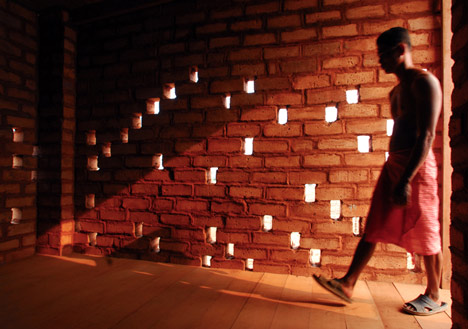
Holes in wall to let sunlight through and also aid in ventilation of the building, image via dezeen

Urban Interventions

My urban intervention Crate[or] is now online for your perusal here. Feel free to email or comment on the project. It forms a part of ongoing design research that I am conducting into approaching the city at a human scale when discussing urban development and the understanding of the forces that play out in the city.

Crate[or], photo by author

6/02/2011

IKEA's 'Homemade is Best' - The architecture of Baking

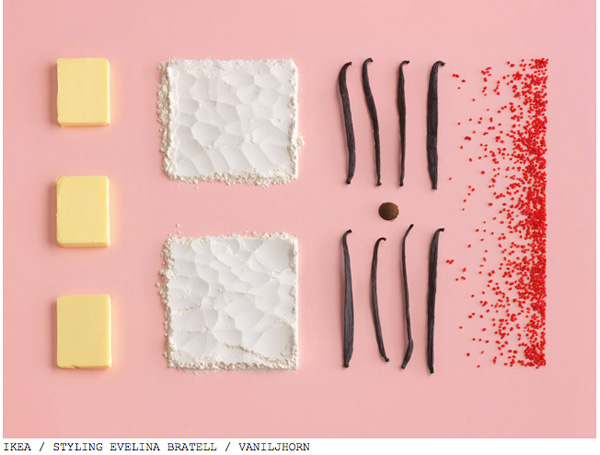
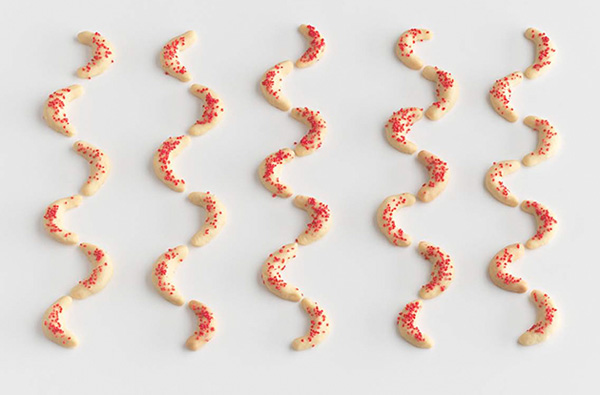
Ikea's 'Homemade is Best' cook book contains 30 traditional Swedish baked goods recipes with a twist. Each recipe is complimented by an image of the ingredients before they are mixed together and baked. It is a wonderful documentation of the process of baking. NO, actually, it is the process of arranging the ingredients of baking.

Napoleonbakelser, before

Napoleonbakelser,after

The ingredients are placed in a decorative composition adjacent to each other and this image is then paired with the end result. But if I was to imagine the scenery of when I bake and cook in my kitchen, the image is a far cry from the stylized and glorified images of this book. It would be interesting to contrast this work by documenting the 'real' process of making and juxtaposition the images next to each other to further the notion of documenting a design process. Because, it is only the ingredients and the end result that is on display here, and the actual MAKING part seem to have been left out.

Kanelbullar (Cinnamon Buns) before


Kanelbullar (Cinnamon Buns) after
Still, a cool idea from the ad-agency Forsman & Bodenfors.

The homemade is best book serve the purpose of drawing more people towards the kitchen and obviously to IKEA's showroom. That is beside the point. These days, people seem to be more obsessed with the end result and product that they forget the beauty in the making of things. This is why I love this project. It starts to talk about the intimate and domestic in a beautiful way. It is a world away from fast-food outlets and mass-production of food. 
Mandelmusslor (Almond mussels), before

Mandelmusslor (Almond mussels), after


Yet the irony is that this work is meant to draw people towards the mass-production of the IKEA kitchen. As if IKEA is saying: OK, so here we have it, we'll let you go back to domesticity and the art of making unique food in your own home so that you don't have to worry about getting your consciousness dirty with the immorality of mass-produced food. Leave the mass-production to us and you'll be a happy peach. 

vaniljhorn (vanilla horn) before,
from here

vaniljhorn (vanilla horn) after, from here

Looking at the homemade is best work, makes me a happy peach but I just want to reconfigure the work to include the process of making it as well.

Now I know the point was not that at all, it is just the way I think. Originally, the ad company made the cookbook, created an iphone app that traced your exercise and told you when  you'd done enough exercise and earned the calories to eat one of the recepies. Clever, isn't it. Apparently, the ad reached 40 million people without IKEA spending a cent on media and promotional costs..somehow...I am contributing to the publicity too. Hmmm.

Here's a link to the movie.

I think I might just visually suggest how this process would look if applied to the components of an architectural project. Watch this space.
Related Posts Plugin for WordPress, Blogger...